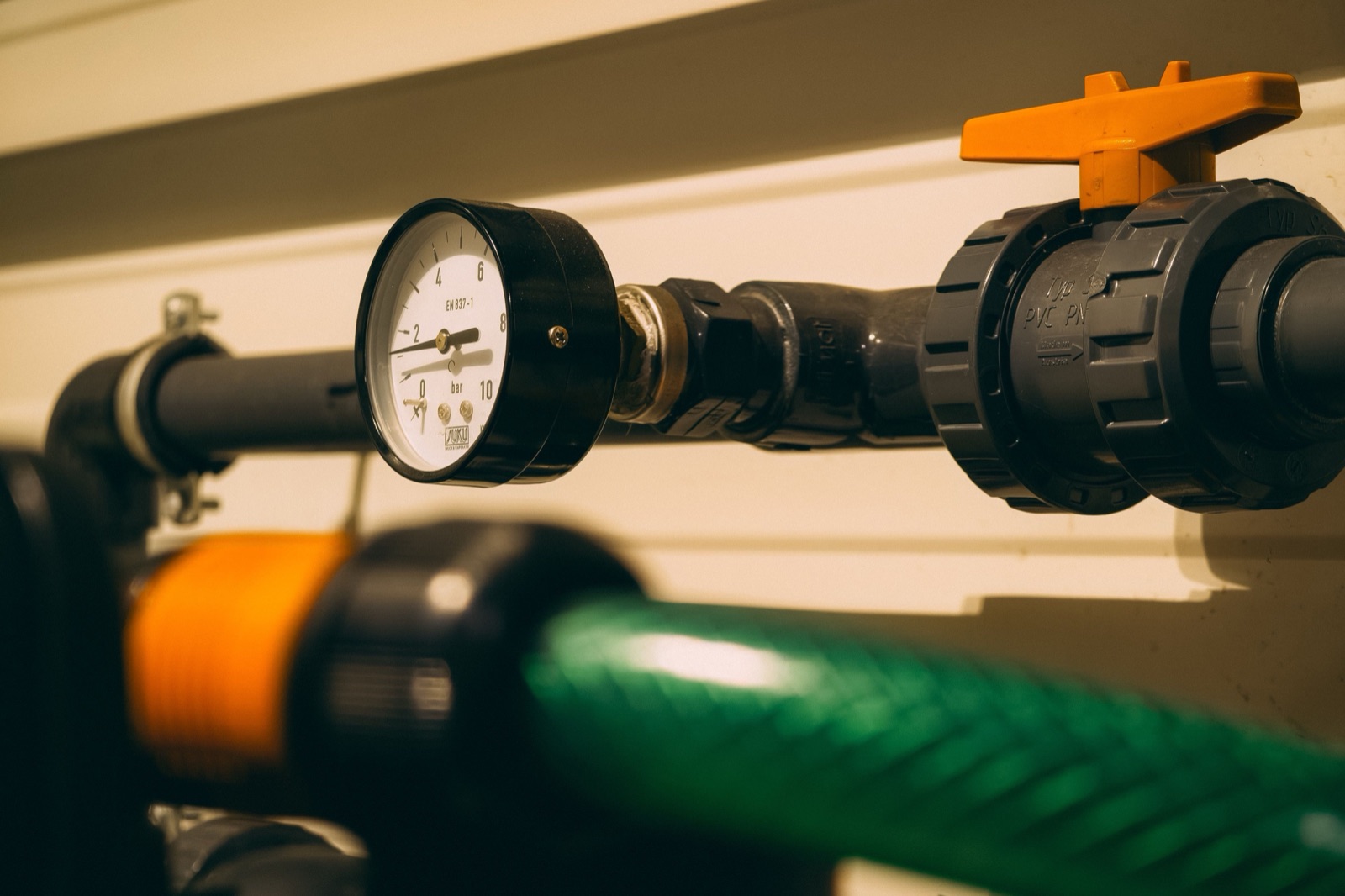
Legionella in cold water: what heat means for care homes and hospitals
In high summer you sometimes notice it simply by washing your hands: the water from the cold tap is barely cool any more. In a care home or a hospital that deserves a closer look, because more than comfort is at stake.
The problem is that Legionella multiply wherever warmth, standing water and biofilm come together. Biofilm is a thin, slimy coating of microorganisms on the inside wall of a pipe, where Legionella find shelter. A heatwave brings the warmth, and any tap or shower nobody turns on for days supplies the standing water.
Why cold water warms up in a heatwave
Cold water only stays cold while it keeps moving or its surroundings stay cool. If rooms sit above 25 °C for a long stretch, the water in well-insulated, properly laid pipes can climb past 25 °C as well. VDI 6023, the German engineers' hygiene guideline for drinking water installations, makes exactly this point. When it happens, the guideline calls for action, either in how the building is run or on the pipework itself.
Insulation only buys you time. Water that stands long enough will pick up the heat regardless. In summer, that puts the shower nobody turns on for days most at risk. And not just in empty rooms: if a resident has bed baths, the shower in their room goes unused too.
On top of that, some of the heat comes from inside the building. Cold water pipes that run through plant rooms or warm risers heat up along the way. And in extreme heat, the water can already be above 20 °C by the time it enters the building. That leaves very little room before the 25 °C limit.
Even so, a heatwave on its own is no reason to worry. The DVGW, Germany's technical and scientific association for gas and water, looked into this in a research project: when the temperature went above 25 °C only briefly, Legionella counts did not shoot up straight away. The trouble starts when the warmth lingers and the water sits still. Our overview of how Legionella grow explains why that mix of warmth, stagnation and biofilm works so well for them.
Cold water & temperature
When cold water is too warm
This matters more in your facility than in most buildings. Many of the people who live or are treated there are especially vulnerable to Legionella infection, such as older people or anyone with a weakened immune system. What that means day to day is covered on our pages for care homes and hospitals.
Measuring cold water temperature properly
A hand under the tap won't tell you whether your building is affected. For that you need a thermometer and the right spot: the water at the end of a pipe run, at the last taps and showers it reaches, tells you the most. Take readings in rooms that heat up in summer as well.
The effort pays off twice. You'll spot a pipe that runs warm early on. And if a test ever comes back positive, you'll already have the figures specialists look at in a risk assessment.
That assessment is a written evaluation of where the risk in the system lies. The Umweltbundesamt (Germany's federal environment agency) sets out in its recommendation on risk assessment that the values checked include the temperature at the last taps and showers.
How you measure matters too. Turn the tap on fully and only take the reading after half a minute. DIN 1988-200, the German standard for drinking water installations, is clear here: in normal operation, cold water must be no warmer than 25 °C 30 seconds after the tap is fully open. If your reading is higher, something is wrong at that outlet, and it's a job for your maintenance team or a specialist contractor.
A second reading where the water comes into the building shows where the heat is coming from. If the water is already warm there, the cause lies in the public supply, before your own pipework even begins. If it only warms up on the way to the rooms, the cause is inside your building. That is actually the better news, because it means you can do something about it.
What you can ask your maintenance team this week
- Where do we measure the cold water temperature, and when did we last do it?
- Are there pipes or stretches of pipe that nobody uses any more?
- Does the water already arrive warm in summer?
- Who flushes the rarely used showers, and where is that recorded? (Flushing means running the water until fresh water comes through.)
What to write down
Every time you measure, note the date, time, location and reading. After a few weeks, the list shows whether you caught one hot afternoon or a pipe that runs warm all the time. If a lab result later shows Legionella, it also helps with the risk assessment, which draws on what is known about the system and how it is used. And you can show that someone was keeping an eye on things.
What helps against warm cold water in summer
Before you think about routines, ask what is causing the warmth, because the fix depends on it. If the cold water pipe runs through a plant room or a warm riser, have it rerouted. If the insulation isn't good enough, it needs upgrading. Both are work for a specialist contractor, but they tackle the problem at the root.
When the problem is standing water, there are two ways to deal with it. Have showers and taps nobody needs any more removed together with their supply pipe, ideally including the branch fitting. That way no dead leg is left behind where water sits permanently. Flush all the others regularly.
VDI 6023 works on the basis that the water is replaced at least every 72 hours. It calls for shorter intervals in hospitals and care homes and wherever cold water warms up noticeably. In other words, for your facility, 72 hours is effectively the upper limit, not the routine. Our guide to flushing drinking water systems explains how long and how often to flush.
It gets harder when the water is already warm as it comes in. Flushing alone won't help then, because the fresh water is warm as well. What you need in that case is a solution designed for the specific building, for example regular flushing together with active cooling of the cold water.
So the order is: cause first, routine second. Flushing keeps the water moving, but it won't remove a heat source sitting in the wrong place.
For showers that go unused for days, there is the hygiene flush device for exposed shower installations from Aqvior. It sits behind the existing shower fitting, flushes the shower automatically and documents every flush, without anyone having to remember. You keep flushing sinks and all other taps according to your facility's own plan.
When Legionella are found in cold water
When a positive result comes back from the lab, it's natural to wonder whether different rules apply to cold water. The short answer is no. Germany's Drinking Water Ordinance makes no distinction between cold and hot.
What counts instead is the technical action value, the level at which you are required to act. For Legionella it is 100 CFU/100 ml, meaning 100 colony-forming units, or bacterial colonies, counted in 100 millilitres of water.
Once that value is reached in a drinking water installation, § 51 TrinkwV (Section 51 of Germany's Drinking Water Ordinance) sets out a fixed order. First, you report the result to the Gesundheitsamt (local public health authority), then you have the cause investigated, which includes an on-site inspection. After that comes a written risk assessment, which determines what needs to be done. Our guide on what to do about Legionella in drinking water walks through the whole process step by step.
From 100 CFU/100 ml
The sequence after a positive result, in cold and hot water alike
In practice, this is where your summer readings earn their keep. If you can put them on the table, the specialists have a starting point, because the list shows which pipe ran too warm and when.
For medical facilities, the Umweltbundesamt also points to the recommendations of KRINKO, the infection prevention commission at the Robert Koch Institute. In hospitals, the hospital hygienist coordinates the risk assessment.
Until remediation is done, filters fitted directly to taps and showers can also lower the risk. They won't cool a pipe that runs too warm, though.
Frequently Asked Questions
Can you drink cold water that contains Legionella?
According to the Robert Koch Institute, drinking isn't considered a route of infection, because stomach acid kills Legionella. People mainly catch it by breathing in fine water droplets, and less often when water goes down the wrong way while swallowing and reaches the airways.
After a positive result, the risk assessment tells you whether use of the water has to be restricted. If necessary, the Gesundheitsamt can order further action.
How do you get rid of Legionella in cold water?
You start with the cause: the heat source, the weak insulation or the standing water. The risk assessment determines exactly what needs doing, and a specialist contractor carries out the work. Flushing alone doesn't remove a heat source. Our guide Legionella in drinking water: what to do walks through the steps after a positive result.
What does the DVGW say about Legionella in cold water?
In short: from 25 °C Legionella can multiply in cold water, and the warmer the water gets, the more they multiply. That was the finding of research project W 201629, commissioned by the DVGW from 2016 to 2019. From 30 °C, the rise was clear.
The project is also reassuring on two points. When the water was above 25 °C only briefly, counts did not spike right away. The good news from the same project: if your cold water system follows the current DVGW rules, Legionella should not reach levels that harm health.
Is cold water tested for Legionella?
No, not separately: Germany's Drinking Water Ordinance doesn't distinguish between cold and hot water when it comes to testing. Care homes and hospitals with central water heating and showers generally have to have their drinking water tested for Legionella every year. That is set out in § 31 TrinkwV (Section 31 of Germany's Drinking Water Ordinance), and the duty applies when all of these conditions are met at the same time:
- the water is supplied as part of a commercial or public activity
- the central water heater or storage tank holds more than 400 litres, or a hot water pipe between the heater and a tap holds more than 3 litres (not counting the circulation loop)
- there are showers or other outlets that turn water into a fine spray
- the building is not a one- or two-family house
None of these conditions concerns the cold water. Sampling points follow accepted engineering standards.
If you suspect the cold water, an approved testing laboratory can take targeted samples from it. Our guide to Legionella testing explains who has to test and how often.
Sources
- Bundesministerium für Gesundheit (2023): Drinking Water Ordinance (TrinkwV), § 31 Testing obligations regarding Legionella spp. (in German)
- Bundesministerium für Gesundheit (2023): Drinking Water Ordinance (TrinkwV), § 51 Operator duties regarding Legionella spp. (in German)
- Bundesministerium für Gesundheit (2023): Drinking Water Ordinance (TrinkwV), § 52 Informing consumers (in German)
- Bundesministerium für Gesundheit (2023): Drinking Water Ordinance (TrinkwV), § 68 Special measures by the public health authority regarding Legionella spp. (in German)
- Bundesministerium für Gesundheit (2023): Drinking Water Ordinance (TrinkwV), Annex 3 Part II, technical action value for Legionella spp. (in German)
- Umweltbundesamt (2025): Carrying out a risk assessment regarding Legionella spp. under § 51 of the Drinking Water Ordinance, as of 13 October 2025 (in German)
- Umweltbundesamt (2012): Recommendations for carrying out a hazard analysis under the Drinking Water Ordinance, as of 14 December 2012 (in German) (superseded by the agency's 2025 recommendation "Carrying out a risk assessment regarding Legionella spp. under § 51 of the Drinking Water Ordinance"; § 51 TrinkwV still refers to the 2012 version)
- DVGW (2019): Research project W 201629 "Legionella in cold water" (in German)
- Robert Koch-Institut (2021): RKI guide to legionellosis (in German)
Fix the cause first, then automate the shower flush
The Aqvior device flushes showers nobody uses for days and logs every flush.
Fitted without bathroom renovation · No power connection needed · Every flush logged
Stay current without going looking
Once a month: what we have published on drinking water hygiene, and what we are working on at Aqvior.
Thank you. Please confirm your email address.
The content of this article is for general information and does not replace legal, technical, or health-related advice in individual cases. Information on Legionella and associated health risks is general in nature and constitutes neither medical advice nor an assessment of a specific drinking water installation. For implementation in your operation, clarify your specific situation with the responsible Gesundheitsamt (local public health authority). This article contains links to Aqvior products.